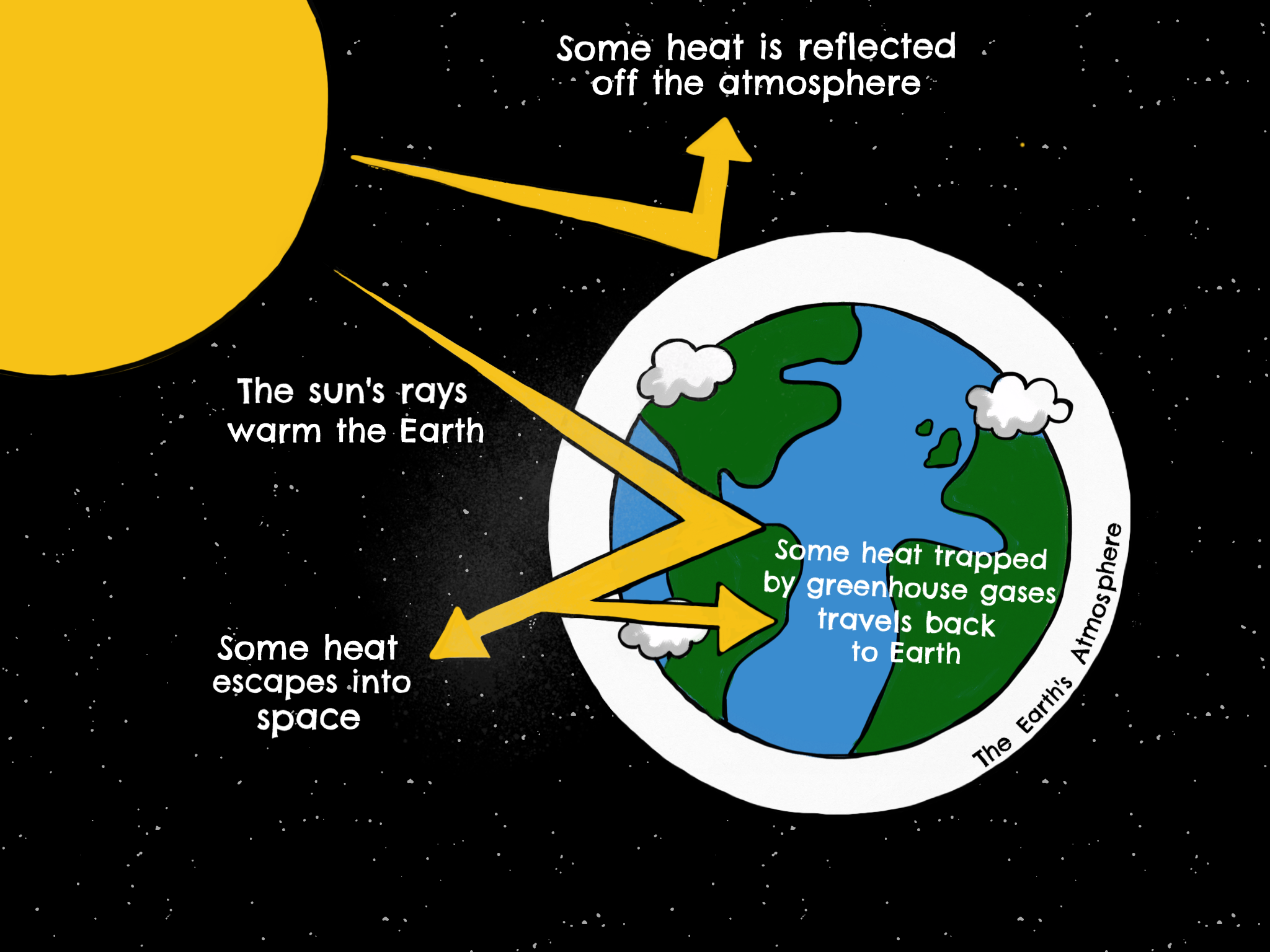
The greenhouse effect is the process by which radiation from a planet's atmosphere warms the planet's surface to a temperature above what it would be without this atmosphere Radiatively active gases (ie, greenhouse gases) in a planet's atmosphere radiate energy in all directionsPart of this radiation is directed towards the surface, thus warming itThe greenhouse effect has kept the Earth's average temperature a good deal higher for billions of years, making it possible for life as we know it to evolve Over the past several millennia the average Earth temperature has been about 15 °C (59 °F) The figure below illustrates how greenhouse gases keep the Earth warmer than it would be Greenhouse gases are gases in the Earth's atmosphere that produce the greenhouse effect Changes in the concentration of certain greenhouse gases, from human activity (such as burning fossil fuels), increase the risk of global climate change Greenhouse gases include water vapor, carbon dioxide (CO 2), methane, nitrous oxide, halogenated fluorocarbons,
Introduction To Greenhouse Gases Industry And Climate Change

